Most people who try affiliate marketing start with a plan that feels responsible: spend a few months learning the fundamentals, build up some content, and only then start looking for ways to earn. It sounds sensible. It is also the exact point where most beginners stop.
The problem is not that they lack ability. It is that study without a live result tells you nothing about whether what you learned actually works. You can read ten lessons on choosing an offer, writing a review, or building a landing page, and still have no evidence that your conversion idea is sound, because nothing has gone to a real audience yet. Months pass, no commission arrives, and the gap between effort and payoff starts to feel like proof that the whole thing does not work for you. Most people quit in that gap, not because the material is wrong, but because nothing in their month three looked different from their month one.
Why ‘Learn First, Earn Later’ Is Where Most Beginners Quit
The learn-first model treats income as a reward you unlock once you’ve finished studying, like a certificate at the end of a course. But affiliate marketing does not work like a course. It works like a feedback loop: you publish something, you get a result, you adjust, you publish again. If the first several weeks contain no publishing and no result, there is no loop. There is only study, and study on its own does not tell you if your writing converts, if your offer is right for your audience, or if you’re even reaching anyone.

Delay also compounds. Each week without a tangible outcome makes the next week easier to skip, because nothing is proving the time is worth spending. A beginner who earns a small first commission in week three has a reason to keep going in week four. A beginner who is still “preparing” in week twelve usually has already drifted off.
The Shift: What Changes When You Can Earn From Day One
The current Wealthy Affiliate structure closes that gap by giving you a live, payable program to test against from the moment you start, rather than after you’ve finished a set of lessons. Instead of learning keyword research in the abstract, you learn it while applying it to a real page promoting a real program. Instead of practicing on a mock project, every skill gets tried on something that can actually convert and actually pay.
This changes what “learning” even means. A lesson on writing a comparison page is no longer an exercise you file away. It’s something you can apply to a page that’s live within the same Hub you’re building, promoting a program you already understand because you’re using the platform it belongs to. The lesson and the test happen in the same sitting.
What the Built-In Affiliate Program Lets You Promote While You’re Still Learning
The affiliate program built into the platform is the one you’re already a user of, which matters more than it sounds. You don’t need to research an unfamiliar product, guess at its selling points, or wait for approval into a program you’ve never used. You already know what the training covers, what Live sessions look like, and what Studio does, because you’re sitting inside all of it.

That familiarity shortens the distance between a new skill and a usable page. If this week’s Focus covers writing a benefit-led paragraph, you already have a subject you understand well enough to write that paragraph honestly: your own experience of starting inside the platform. You’re not forced to invent authority on a topic you’ve never touched. You can describe what you’re actually using, which is the easiest kind of content to write convincingly and the hardest kind for a reader to ignore.
Turning Each New Skill Into Its Own Small Income Test
Every piece of training translates into a testable action if you treat it that way. A lesson on headlines becomes a new headline on an existing page, checked against clicks. A lesson on calls to action becomes a rewritten closing paragraph, checked against conversions. A lesson on SEO basics becomes a retitled page, checked against search traffic over the following weeks.
None of these tests need to be large. The point isn’t to build a finished funnel after each lesson. It’s to take the one thing you just learned and attach it to something that is already live, so the lesson produces a signal instead of sitting in a notebook. Over a run of weeks, those small tests stack into a page, a sequence, and eventually a pattern of what actually moves a reader toward clicking.

This is also where the difference from general beginner guidance matters. A broad learning affiliate marketing for beginners guide walks you through the full shape of the business model. This earn-as-you-go approach is narrower on purpose: it’s about treating the built-in program as your proving ground for every skill, rather than waiting until the broader picture is complete.
Why Never Leaving the Platform Speeds Up Your Feedback Loop
A feedback loop only works if the time between action and result stays short. Every extra step between learning something and testing it, switching tools, hunting for a different affiliate program, building a separate site, adds delay, and delay is what kills momentum in the learn-first model.
Staying inside one Hub removes most of that friction. Your content, your Studio work, your Live sessions and your affiliate links all sit in the same place, so applying a lesson doesn’t require leaving to go set something up elsewhere. You finish a Focus, you open the same page you’ve been working on, and you make the change. The result shows up in the same dashboard you already check. That tight loop, lesson, change, result, is what turns study into practice instead of leaving it as information you intend to use someday.
A Realistic First 90 Days of Learning and Earning Side by Side
In the early weeks, the earning side will be modest and the learning side will dominate: you’re still working out what a good page looks like, what a reasonable headline sounds like, and how the program itself fits together. That’s expected. The purpose of this period isn’t a specific income figure. It’s getting at least one real page live, attached to the affiliate program, early enough that you have something to adjust.
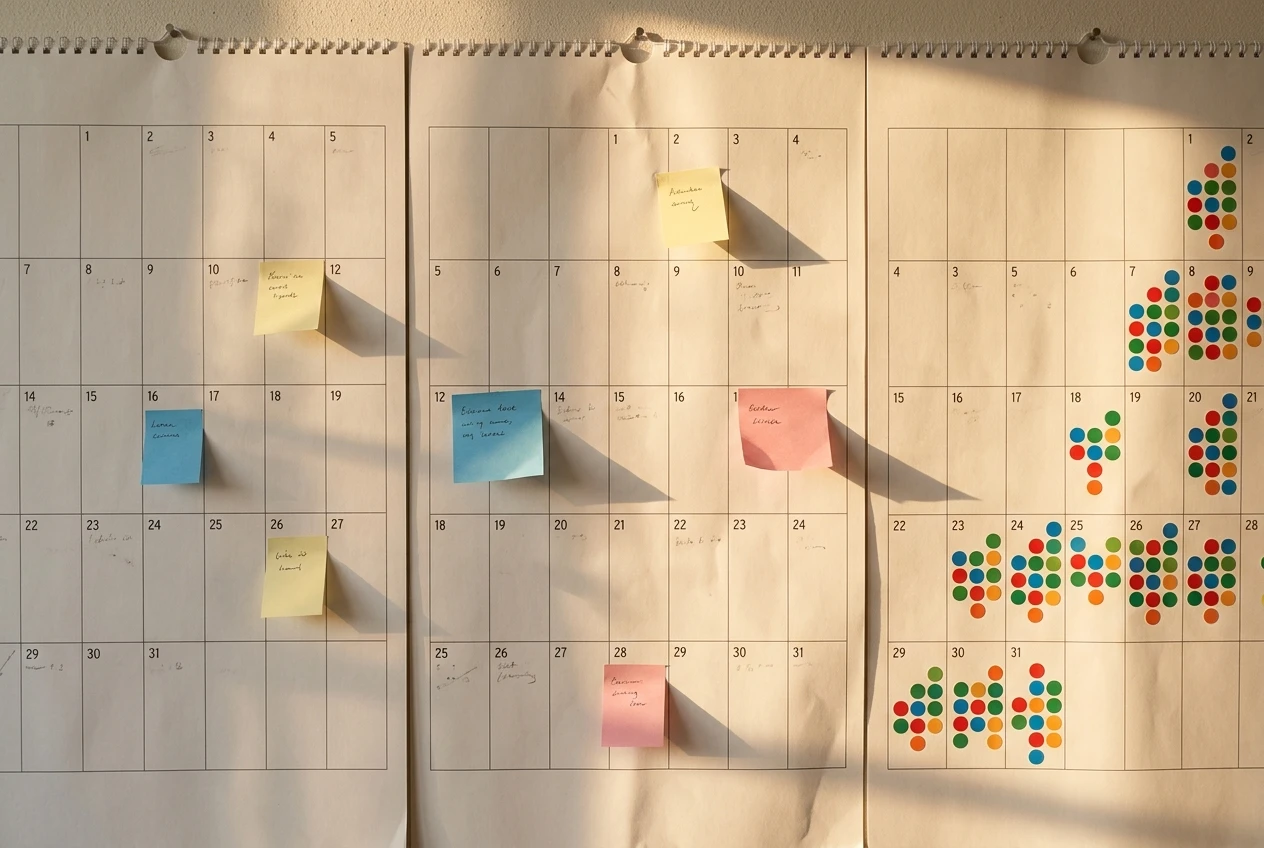
By the middle stretch, the pattern usually shifts. You’re not just applying lessons to one page anymore, you’re comparing a few pages against each other: which headline got more clicks, which close read better, which topic drew more search traffic. The learning starts to follow the earning instead of leading it, because the data from your own pages tells you what to study next.
By the end of the first 90 days, the goal isn’t a finished business. It’s a working loop: content going out regularly, each piece carrying something you tested on purpose, and a clear sense of which of your early pages are worth building on further.
Signs You’re Ready to Push Past Your First Commission
A first commission, however small, is a signal rather than a finish line. It tells you that a specific page, built with specific skills, converted for a specific reader. The next question is whether you can repeat it on purpose.
You’re ready to push further when you can point to which part of a page caused the result, not just that a result happened. If you can say “that headline” or “that comparison point” and explain why, you have something to scale. If you can’t point to a cause, the better move is to keep testing one variable at a time until you can.
You’re also ready when the small, regular act of applying a lesson to a live page feels normal rather than effortful. At that point, the earn-while-you-learn loop has become your actual working method, not just a way to get started.
Pick the lesson you’re on right now and find one way to apply it to the affiliate program today, inside the same Hub you’re learning in, rather than filing it away for later.